How To Attract The Super Powered Hawk Moth To Your Yard
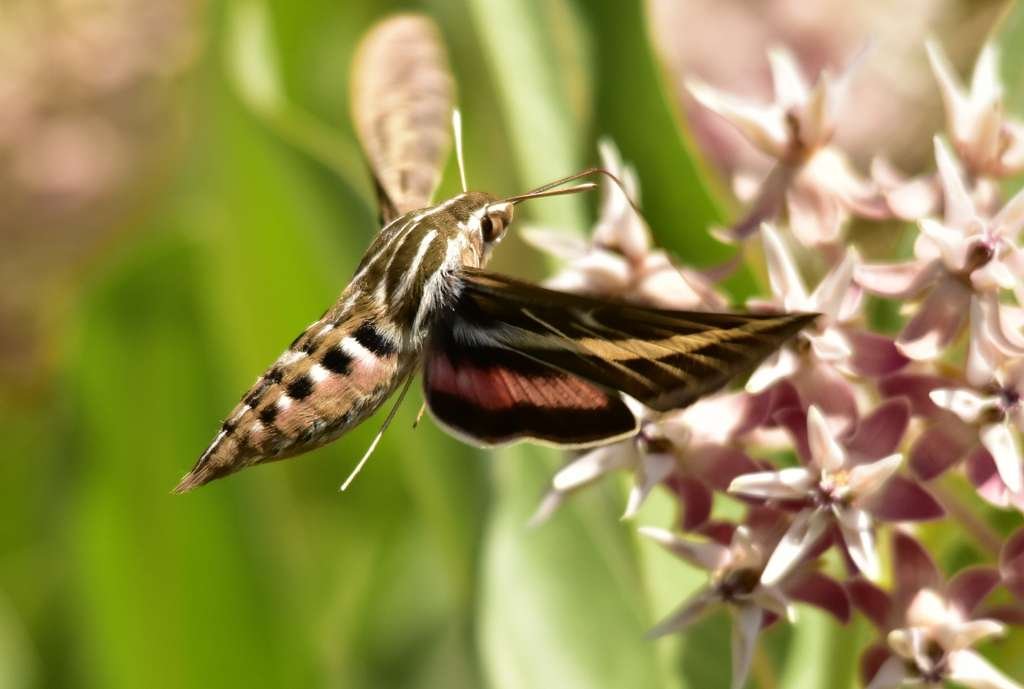
Hawkmoths (family Sphingidae) are one of the most skilled supermoths in the world. Some of the largest moths in the world belong to the hawk moth family. They don’t eat your tears but they hover like hummingbirds, fly faster than you can ride your bike, and can morph into a snake like being. But we don’t see most of them because they come out at night.
Most moths work the night shift, unlike their cousins the butterflies, which are out during the daytime. There are over 160,000 species of moths and when not being chased down by bats, they help pollinate our plants. Many of our foods need pollinators to make fruits, nuts, and vegetables.
My former workplace, The National Museum of Natural History’s Lepidoptera collection holds up to half of the world's species of hawk moths, important pollinators for many wild ecosystems. There are over 1,450 species of hawk moths in total on Earth.
Hawkmoth Super Powers
Hovering Ability
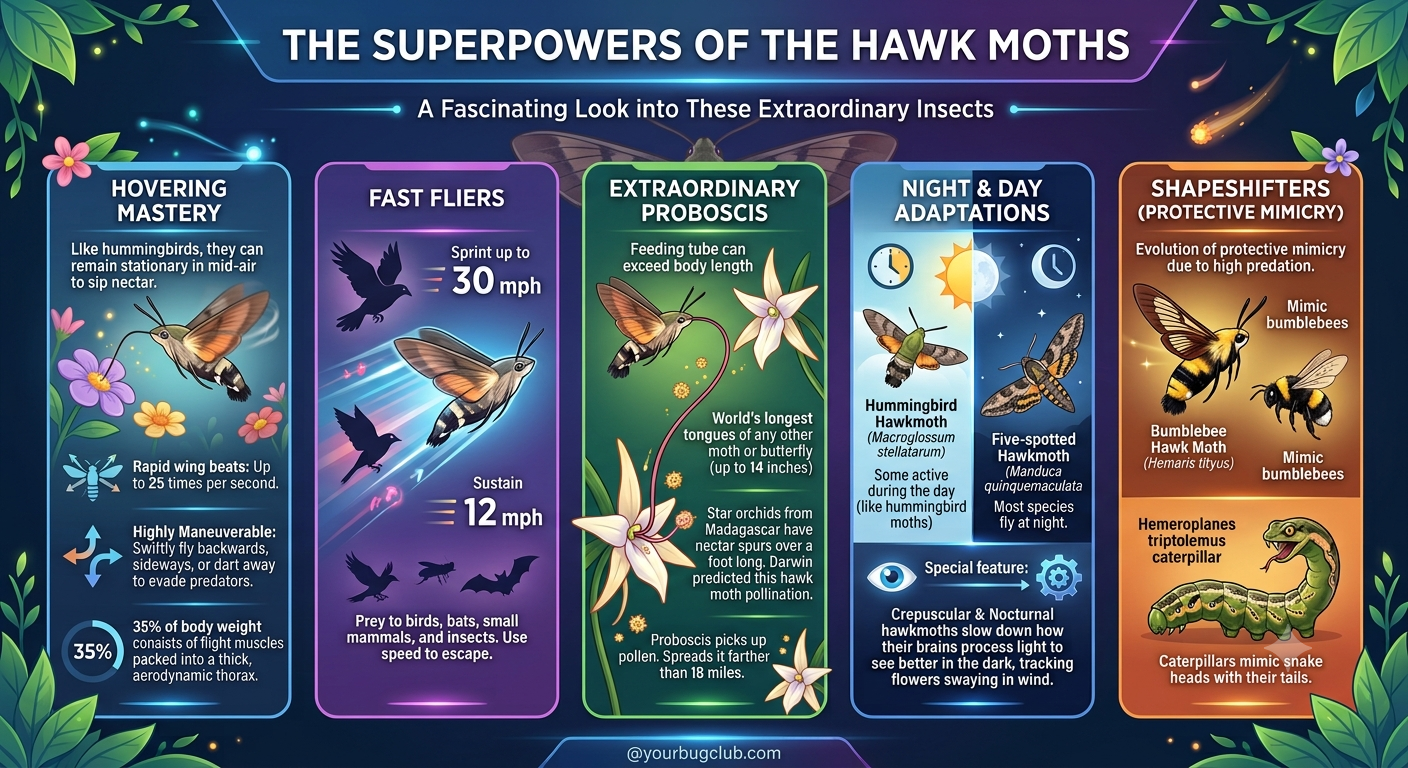
Like hummingbirds, hawk moths can hover in mid-air to sip nectar, rapidly beating their wings. Many species, often called "hummingbird moths," can remain completely stationary in mid-air while feeding on flower nectar. They can beat their wings up to 25 times per second. They are highly maneuverable and can swiftly fly backwards, sideways, or dart away to evade predators. Up to 35% of their total body weight consists of flight muscles packed into a thick, aerodynamically shaped thorax.
Fast Fliers
Hawk moths and their larvae are prey to birds, bats, small mammals, and even other insects. To escape being eaten they can sprint up to 30 miles per hours and sustain 12 miles per hour.
Long Proboscis
Their feeding tube, called a proboscis can sometimes exceed the length of their own body, allowing them to reach nectar that other insects can't.
Hawk moths have the world’s longest tongues of any other moth or butterfly (some up to 14 inches long). Charles Darwin figured this out when he saw star orchids from Madagascar that had nectar spurs over a foot in length. Darwin was ridiculed by other scientists of his day for predicting that these orchids would be pollinated by hawk moths.
When a hawk moth drinks from a flower, its proboscis picks up pollen. That pollen can then be spread to flowers farther than 18 miles away as the moth travels along its feeding route.
Night and Day
While most species (like the five-spotted hawkmoth) fly at night, some (like the hummingbird hawkmoth) are active during the day. Crepuscular (daytime) and nocturnal (night time) hawkmoths can actually slow down how their brains process light to see better in the dark, allowing them to track flowers swaying in the wind.
Shapeshifters
Their vulnerability to predation has resulted in the evolution of protective mimicry. Some mimic bumblebees like the bumblebee hawk moth and some caterpillars have a tail that looks like a snake head like for Hemeroplanes triptolemus.
Saving Endangered Plants
Hawk moths are experts at finding sweet-smelling flowers after dark. They are especially fond of Datura (Jimpson weeds), Mirabilis (Four O’clocks), and Peniocereus (Queen-of-the-night cactus) blossoms. These flowers are highly fragrant with long floral tubes concealing pools of thin but abundant nectar.
Many plants that hawk moths feed on are endangered. They suffer from deforestation and tourism. For example, the red-flowering Puerto Rican higo chumbo cactus lives on three small islands off the coast of Puerto Rico. To survive, it needs pollinators that can fly across the ocean. Because they’re sturdy and large, hawk moths can fly long distances and across island chains, making them perfect for the higo chumbo cactus.
The moths also pollinate the spiky Egger’s century plant, an imperiled species of agave that survives in small, scattered populations on St. Croix of the Virgin Islands.
Common Hawkmoths
These hawk moths are commonly found in backyards so wander around your garden in the day and night to see if you can find them.
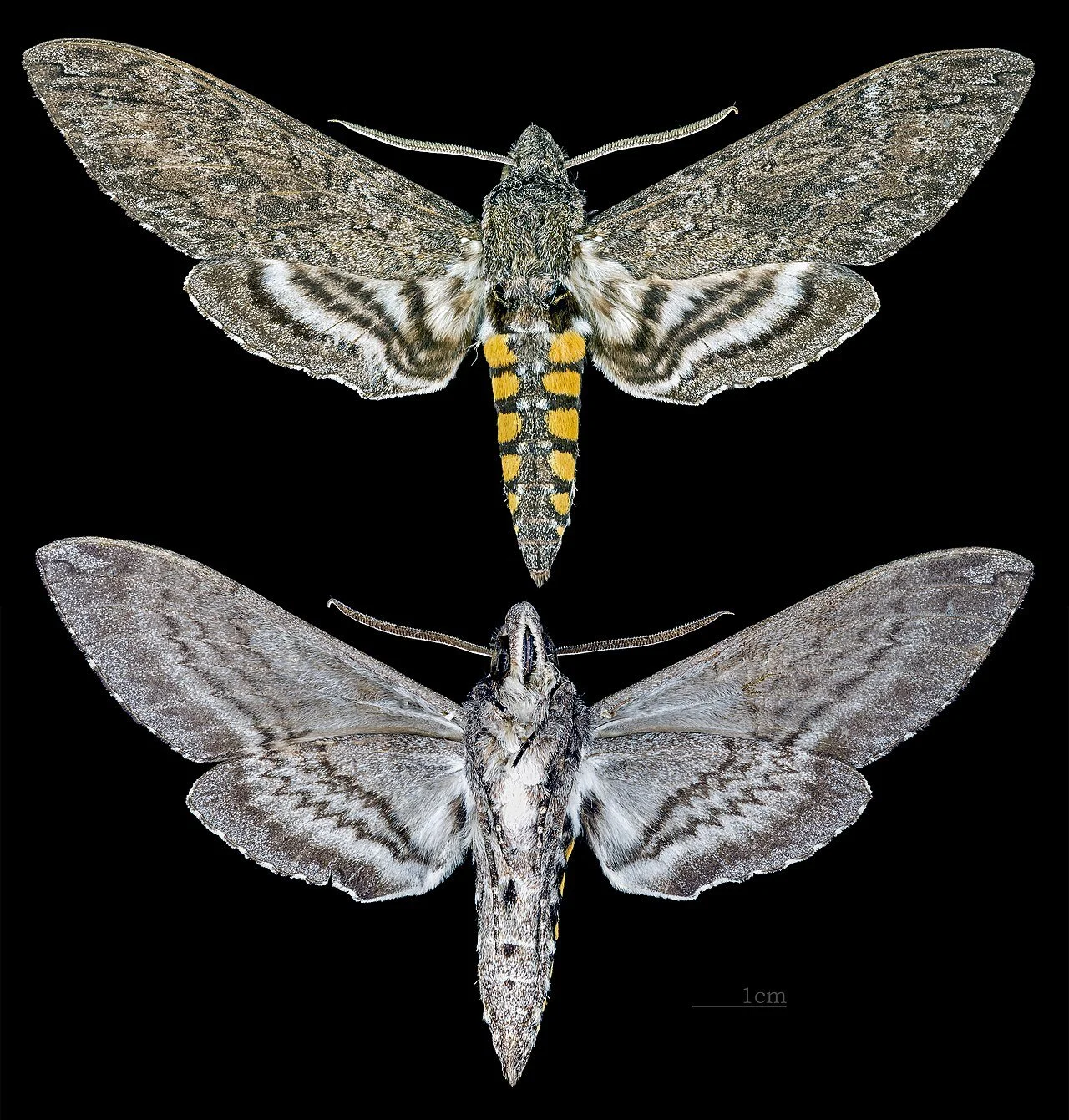
Manduca sexta
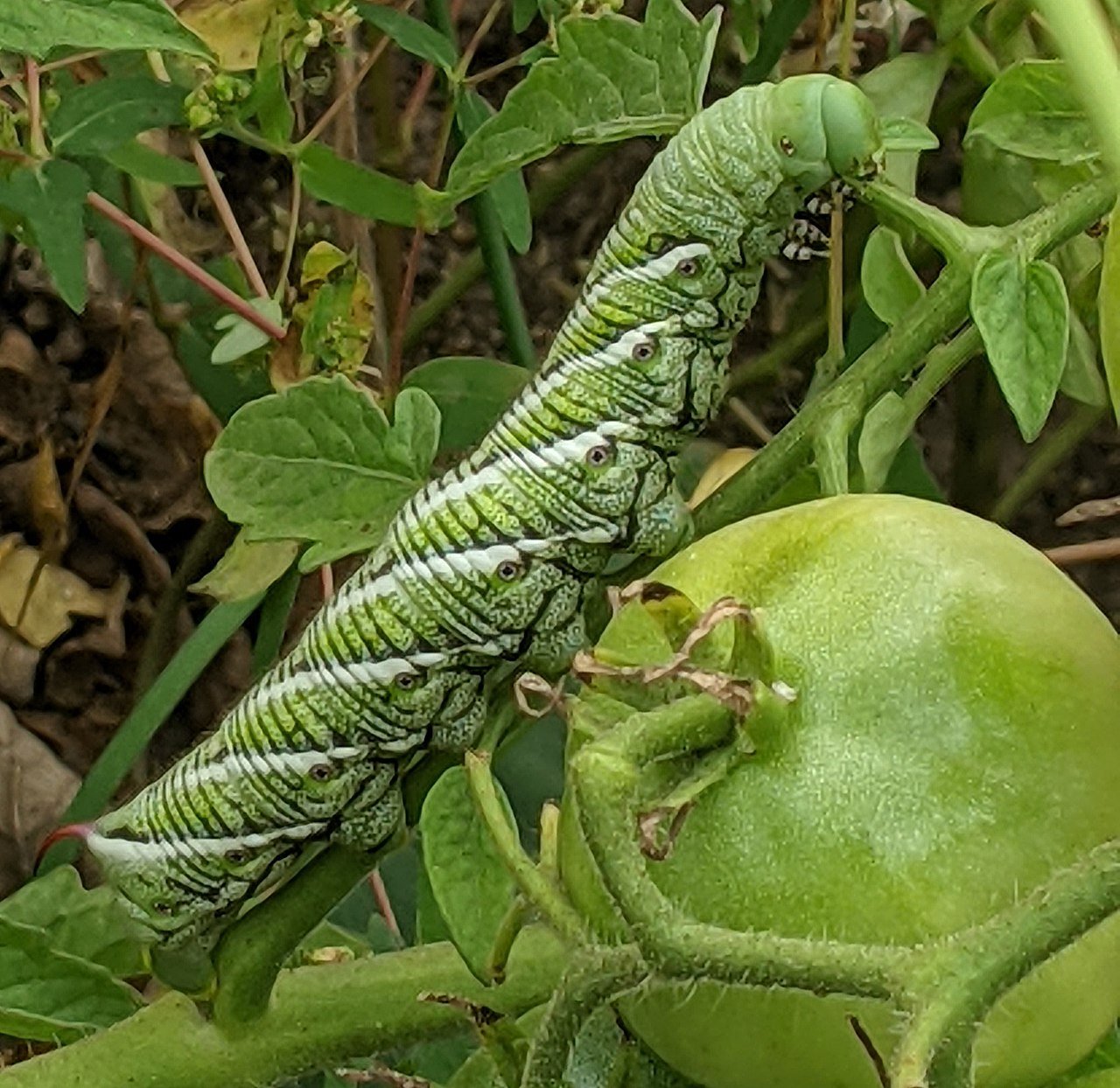
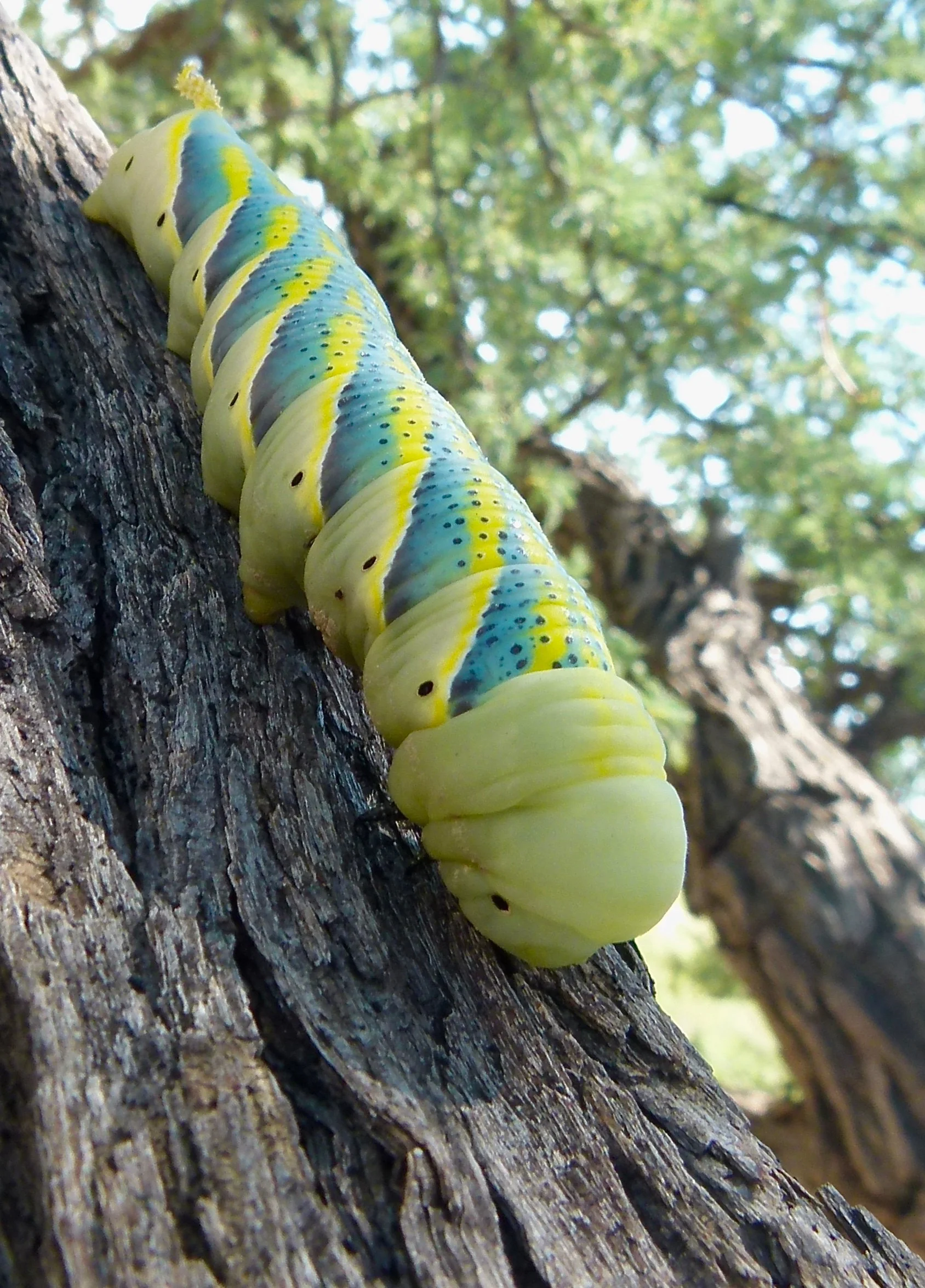
You may be most familiar with the caterpillar of this species known as the tobacco hornworm. They are called hornworms because of the hooklike horm on their back.
They love your tomatoes and bell peppers. The larvae consume large amounts of foliage and 2 or 3 large larvae can virtually defoliate even a large plant.
These are plants from the nightshade family (like tomatoes and tobacco). They sequester the plant's toxins, making themselves unpalatable to predators, and their blood turns bright blue due to a special protein called insecticyanin.
If you spot a hornworm covered in white, fuzzy, rice-like growths, those are actually the pupating cocoons of Cotesia parasitic wasps. These tiny wasps lay their eggs inside the caterpillar, which then consume the host from the inside out.
Death’s Head Hawkmoth
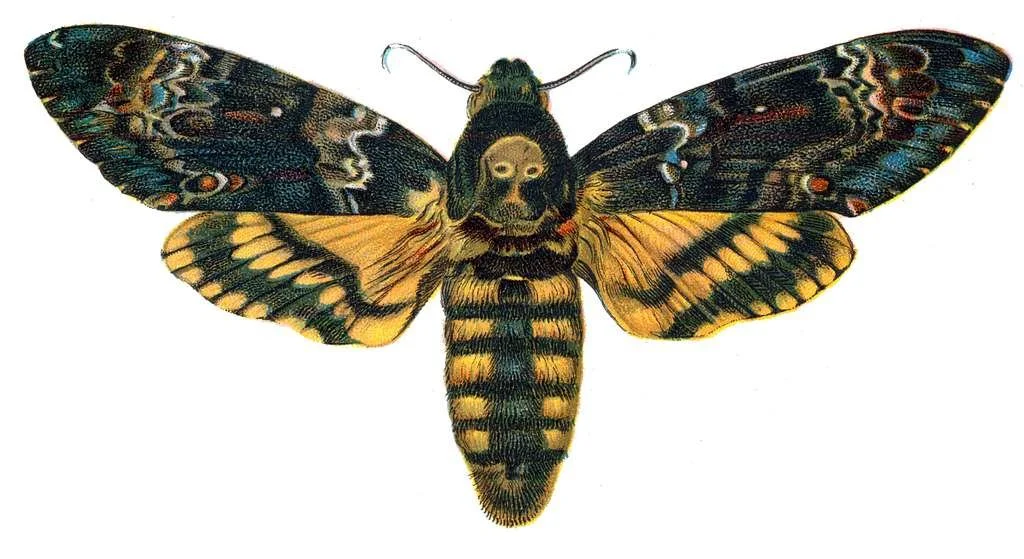
It’s obvious why this moth has won the prize as the insect face of Halloween. It has a skull like head on it’s back. This moth has been famous throughout history.
It appears as a prophecy of doom in Thomas Hardy’s The Return of the Native. It’s in William Holman Hunt’s 1851 painting The Hireling Shepherd hints of impending trouble between the young couple at the centre of the picture. But, most famously of all, the pupa of the moth is left as a grisly calling card by the psychotic serial killer in the 1991 horror blockbuster The Silence of the Lambs.
There are three species of Death’s-head hawkmoth, all of which are aptly named in reference to Greek myths of death. The first species is named after the river of the dead, Styx, that divides Earth from the underworld. The second and third species each refer to one of the three goddess incarnations of fate, or Moirai (Μοῖραι; literally meaning ‘apportioners’), that control the thread of each mortal life from birth until death. ‘The Allotter’, Lachesis, appoints the decided length of life for each being’s thread. ‘The Unturnable’, Atropos, is the oldest of the three fates tasked with the charming job of severing a creature’s mortal thread of life and choosing a suitable mechanism of demise.
The species is nocturnal, only usually seen in light traps and sometimes in beehives in search of honey. Death’s-head hawkmoths are often observed nonchalantly entering hives and re-emerging later completely unscathed despite their massive size and total ‘that’s not a bee.’ appearance. They use chemical camouflage, a thick cuticle and partial resistance to bee venom. The hawk moth produces a pheromone that mimics the scent of bees, allowing the moth to slip past the guards of the colony and drink stored honey from within.
And be ready to be scared if you pick one up. The adults emit a squeak when alarmed, made by expelling air through its proboscis (tongue), which has a structure that vibrates like the reed of a wind instrument.
Hummingbird Hawkmoth
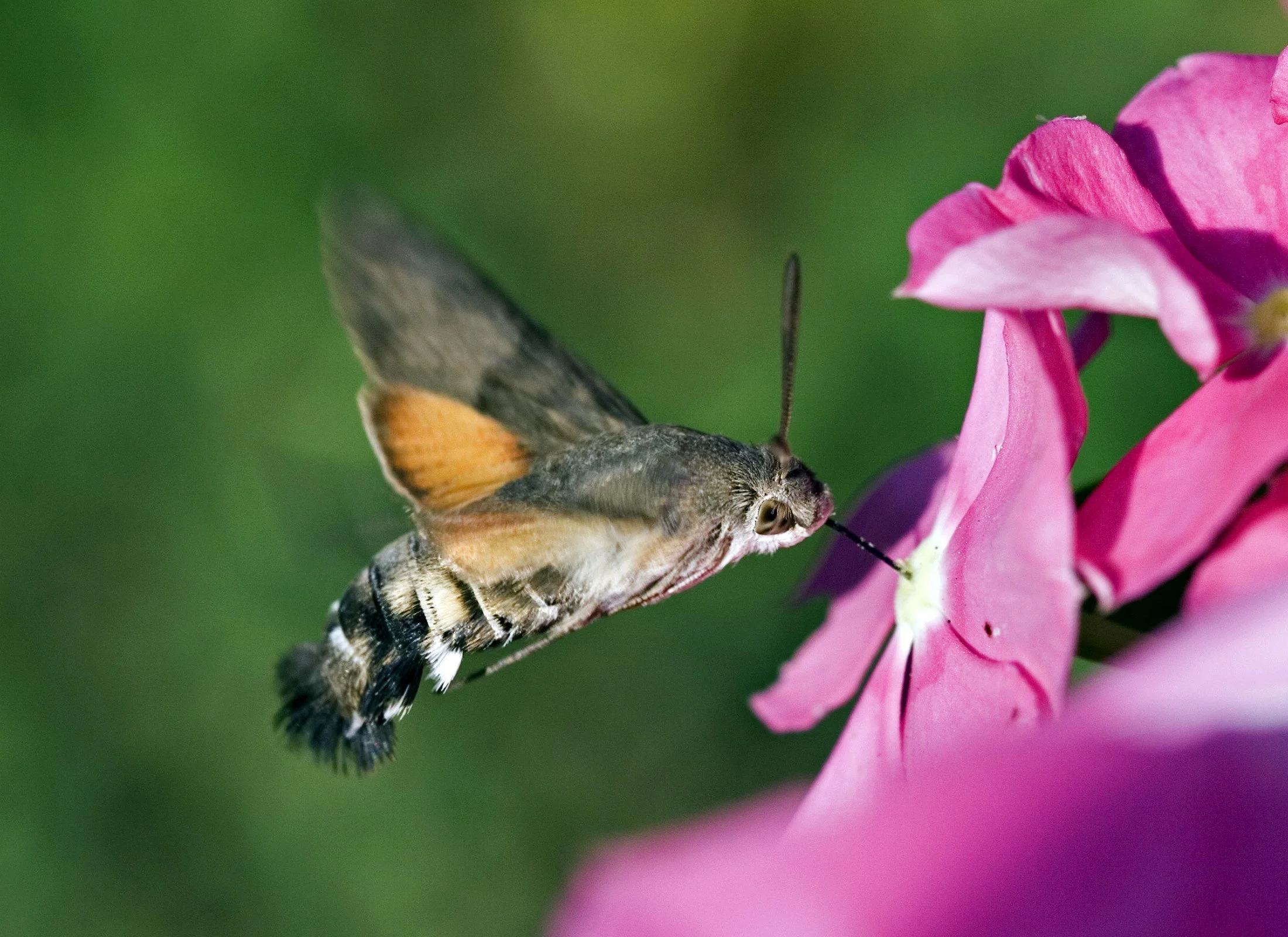
The Hummingbird Hawkmoth (Macroglossum stellatarum) is a remarkable, day-flying moth (one of the few daytime hawk moths) that mimics a hummingbird.
Hummingbird moths are smaller in size, at 1 to 2 inches long. Hummingbirds are typically 3 to 4 inches long. Hummingbird moths have a tail that opens like a fan when they’re hovering in the air to collect nectar from flowers, just like hummingbirds.
Their wings beat at a staggering 70 to 80 beats per second, creating a buzzing noise that gives them their famous hum.
How to Attract Hawkmoths
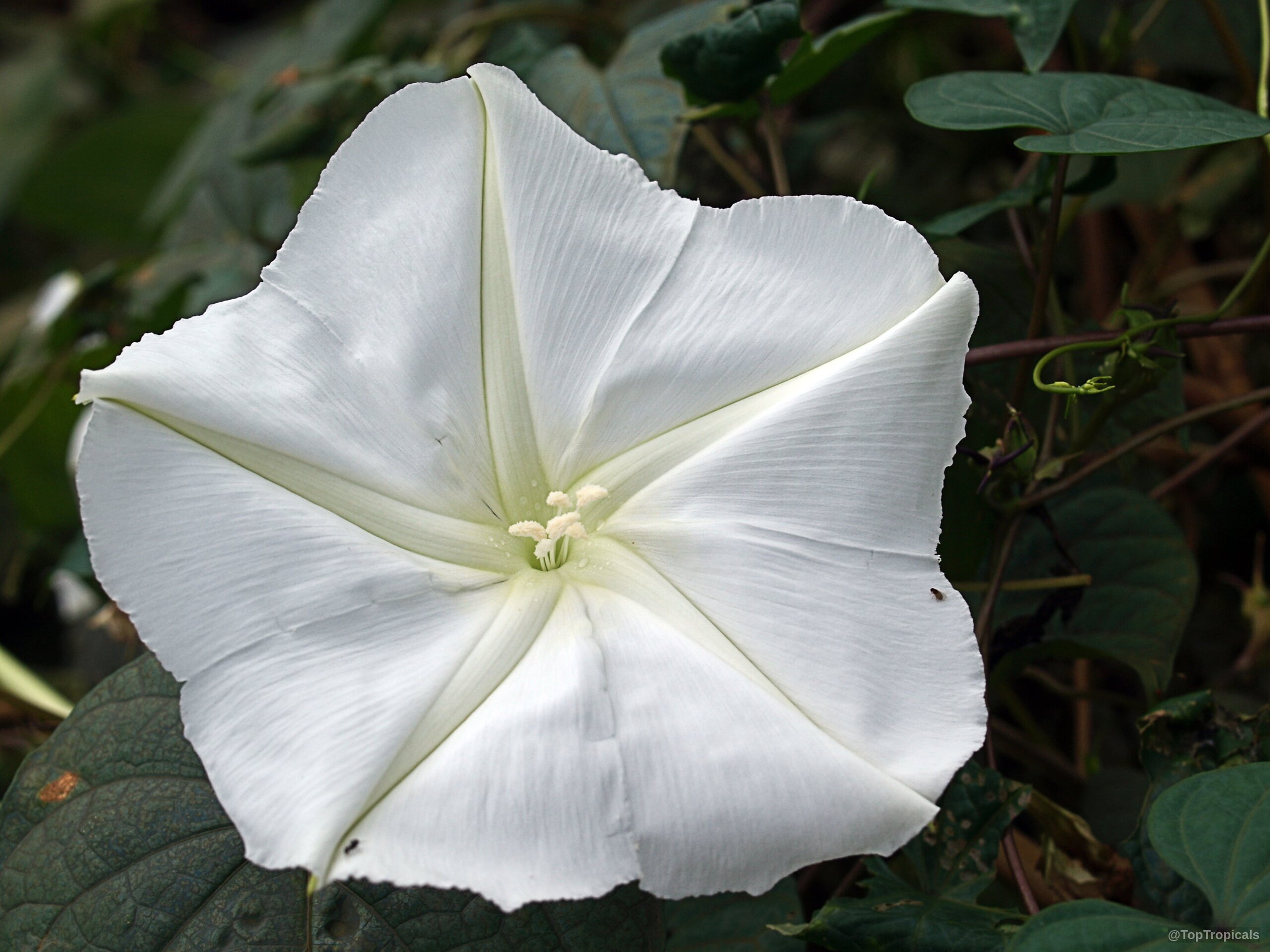
Hawkmoths like to pollinate deep, fragrant, tubular flowers—like evening primrose, jimsonweed, and orchids. They are highly attracted to bright, reflective white or pale-colored flowers that stand out in the dark.
Flowers they love include Moonflower (Ipomoea alba), four-o'clocks, flowering tobacco (Nicotiana), jasmine, and honeysuckle.
Night-scented plants (for nocturnal hawk moths): Plant White Tobacco (Nicotiana), Honeysuckle, Evening Primrose, and Jasmine. These flowers release their perfume in the evening to specifically target these pollinators.
Day-blooming plants (for diurnal Hummingbird Hawk moths): Plant Butterfly Bush (Buddleja), Petunias, Morning Glories, and Red Valerian.
Adult hawkmoths are the parents of hornworms. While hornworms can be pests to crops like tomatoes and peppers, allowing a few to survive will ensure the next generation of pollinators.
If you want to make sure you see them you can setup UV night lights or sugar bait them.
UV Light: A couple of hours before dark, hang a large, bright white sheet against an outside wall or a garage, and shine a UV "blacklight" or an actinic bulb onto it.Turn off all other lights. You will start to see all of the nocturnal insects in your yard show up.

Sugar bait: Because hawk moths feed exclusively on nectar, you can simulate a food source using a liquid sugar bait. Simmer brown ale (or cola) with dark brown sugar for about five minutes, then let it cool. Paint this sticky, sweet mixture onto tree trunks or fence posts, or soak thick absorbent cords (wine ropes) in it and hang them up at dusk.