Steal The Look - Giant Leopard Moth
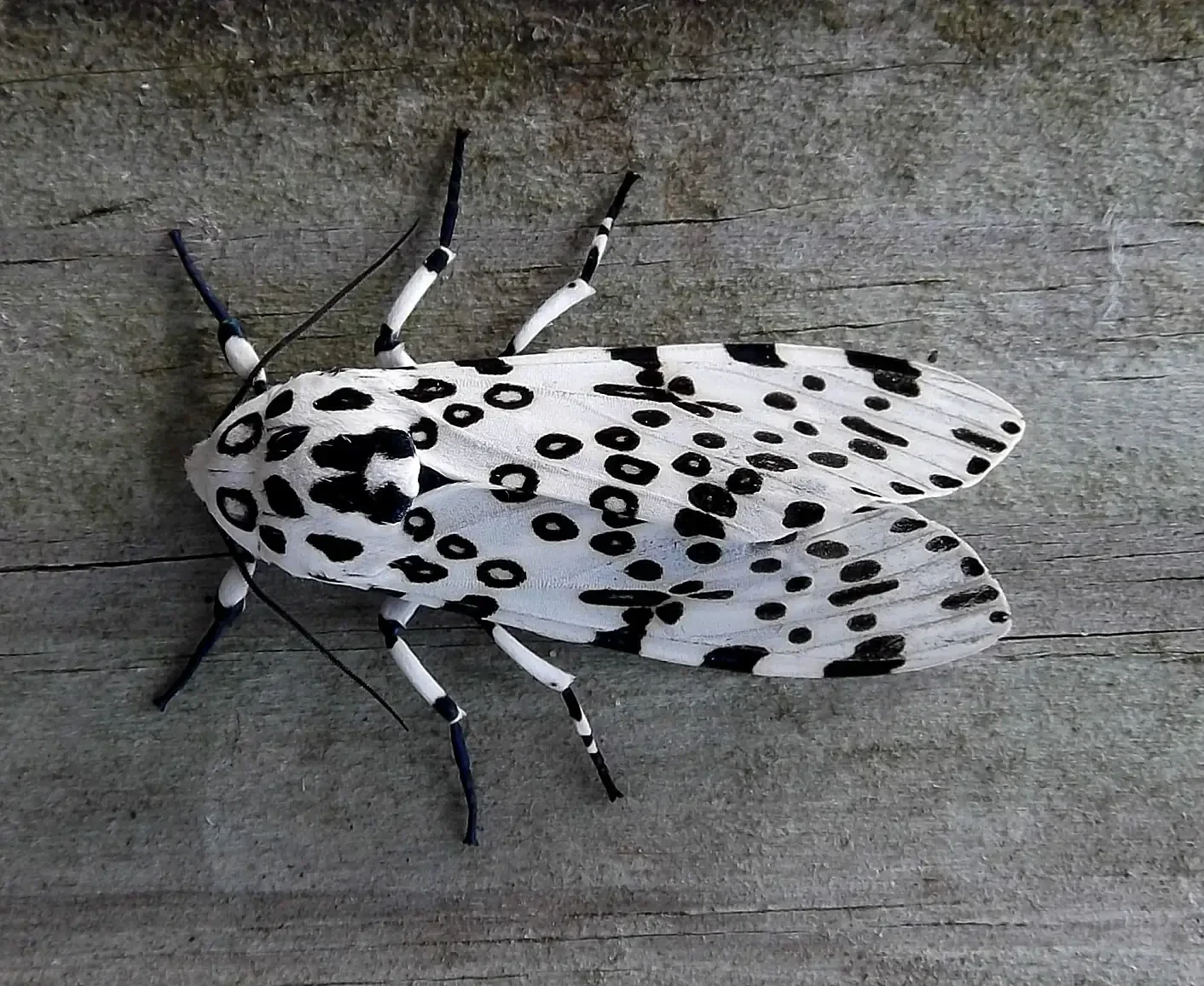
Step into the spotlight with one of North America's most dazzling, high-contrast night fliers: the incredible Giant Leopard Moth (Hypercompe scribonia)! Covered in crisp white wings adorned with hollow dark blue-black circles, this moth looks like a snowy wild leopard ready to glide through the moonlight.
While its wings feature a stunning polka-dot pattern, the Giant Leopard Moth hides a jaw-dropping secret: underneath its wings, its abdomen is wrapped in metallic electric-blue armor with bright orange and yellow side stripes! When a predator comes too close, it rolls into a tight spiral coil to reveal its vivid warning armor!
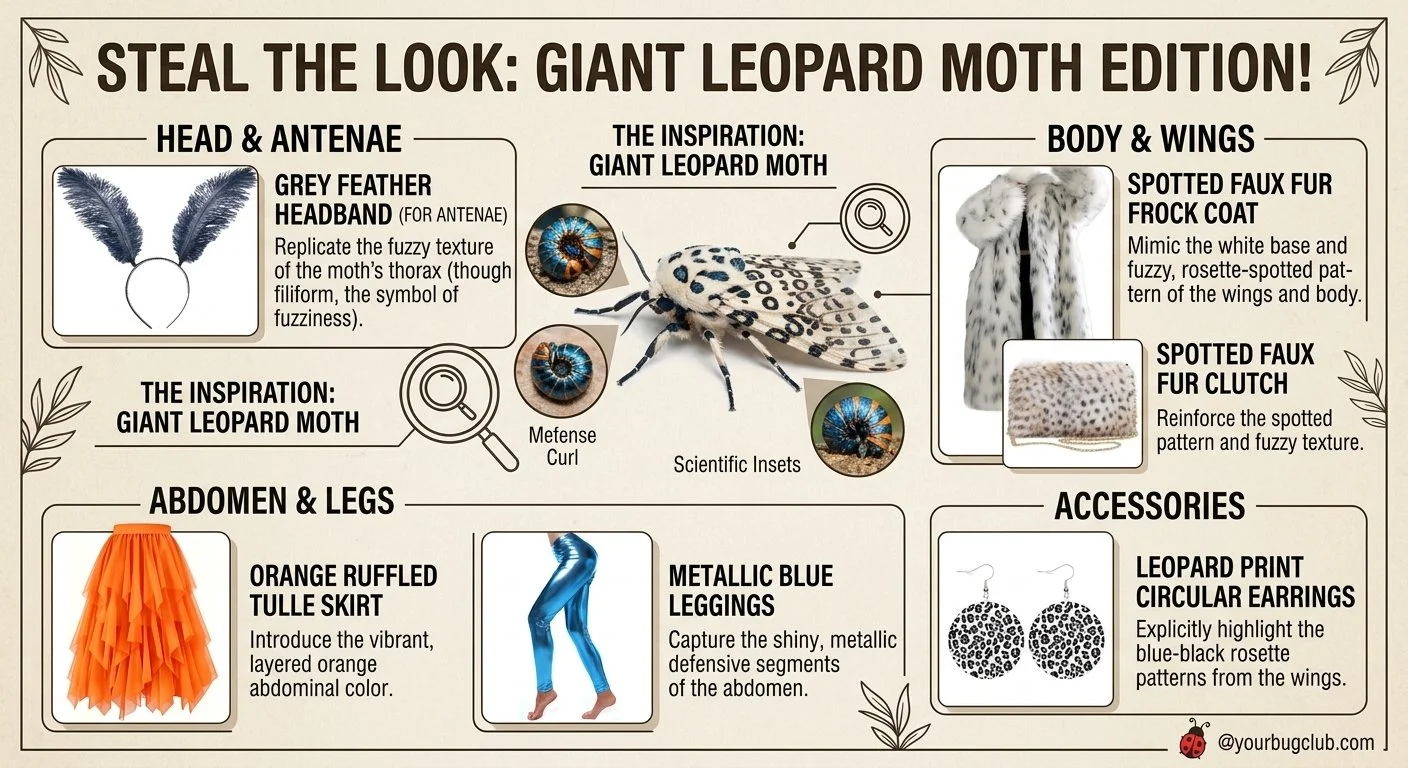
Here’s what you’ll need to put together your Giant Leopard Moth outfit:
The amazing thing about the Giant Leopard Moth is that they have a beautiful irridescent orange and blue under their snowy white exterior. First start by putting on irridescent blue tights and this orange skirt to create this. This is your hidden warning abdomen.
Next, you’ll want to hide those bright colors so the bird doesn’t eat you! Surround yourself in this cozy coat of leopard print and these fuzzy and cozy leg warmers.
And don’t forget to accessorize with this cozy moth purse and earrings. Finish it off with these feathery moth antenna.
Okay guys we have not left you out! Wear these leopard print pajamas to match your moth girl. Then add these blue and orange socks.
You are officially ready to patrol the night as a Giant Leopard Moth!
Giant Leopard Moth Facts
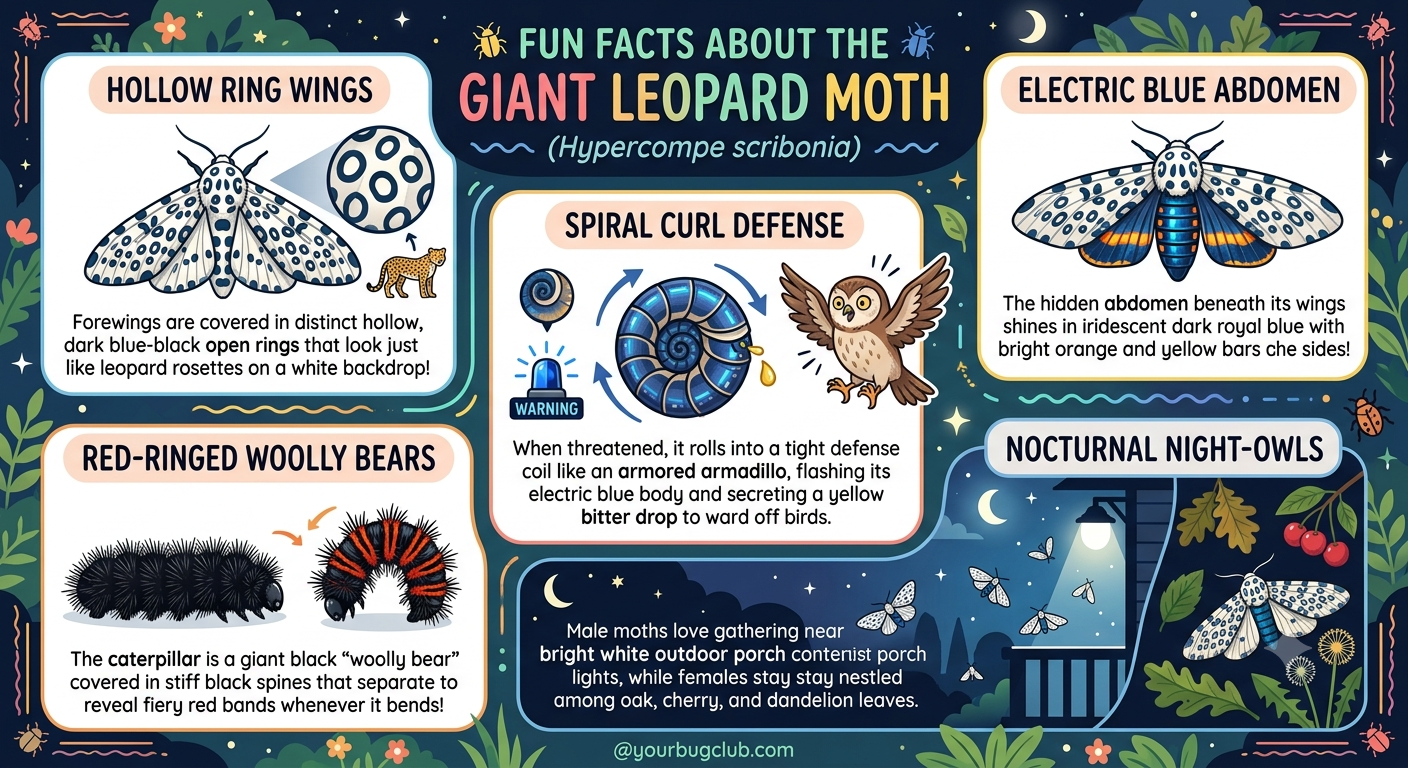
When you transform into a Giant Leopard Moth don’t forget to print out an carry around your fun fact card above. You can share these super powers with your other insect friends.
Hollow Ring Wings
Unlike ordinary spots, the Giant Leopard Moth's forewings are covered in distinct hollow, dark blue-black open rings that look just like leopard rosettes on a white backdrop! The unique wing spots break up the moth's outline, making it difficult for birds to track mid-flight.
Electric Blue Abdomen
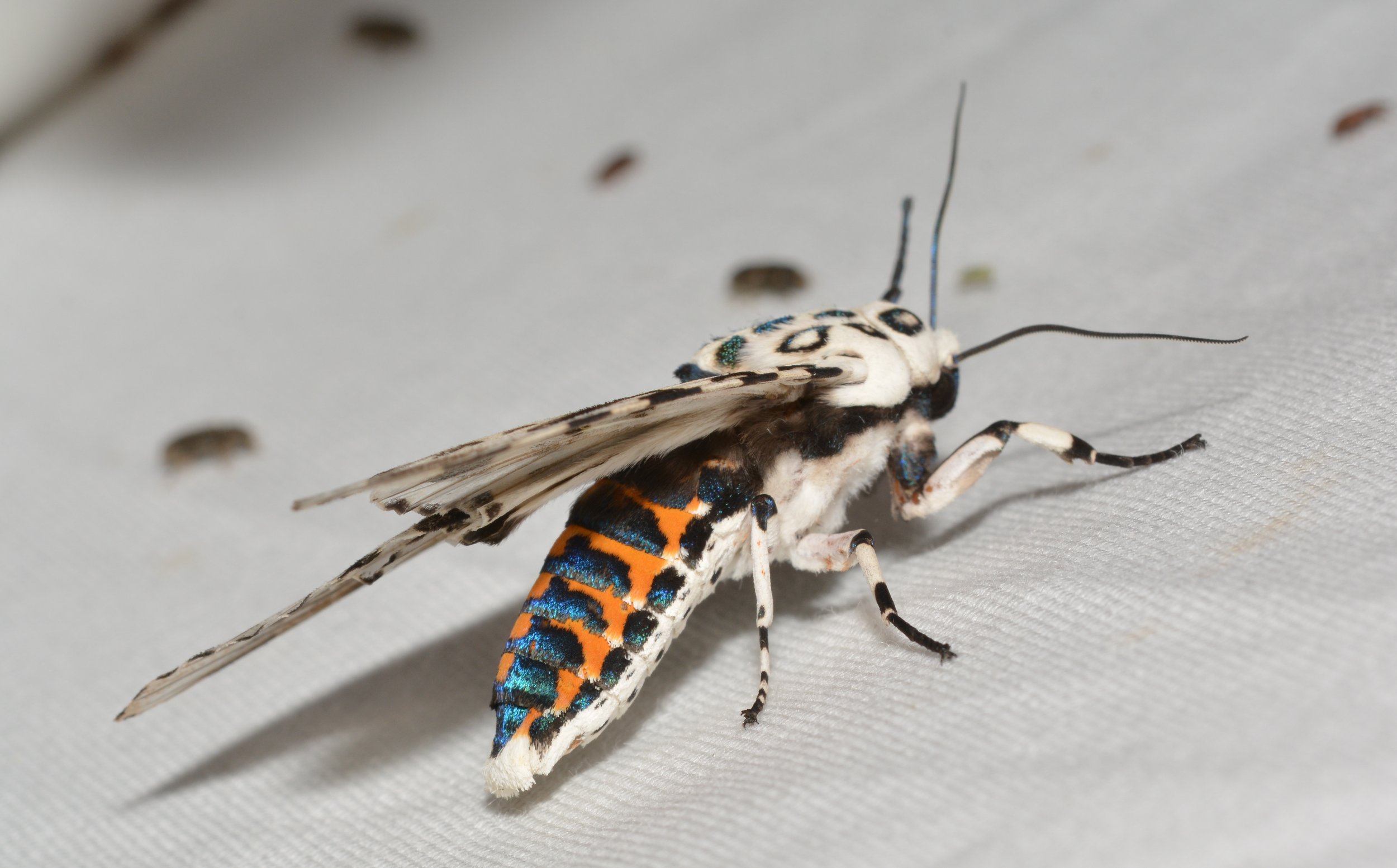
The hidden abdomen beneath its wings shines in iridescent dark royal blue with bright orange and yellow bars along the sides! Its bold colors are an example of aposematic coloration (warning colors) used to fake out predators, but the insect itself is completely non-toxic and harmless to humans.
Spiral Curl Defense
When threatened, the moth rolls into a tight defense coil like an armored armadillo, flashing its electric blue body and secreting a yellow bitter drop to ward off birds. This fluid smells bad and tastes terrible to predators, but it is not poisonous or venomous
Red-Ringed Woolly Bears
Before becoming a spotted moth, the caterpillar is a giant black "woolly bear" covered in stiff black spines that separate to reveal fiery red bands whenever it bends! While red is nature's universal warning color for toxicity, this is a bluff just like the adults blue coloration.

Nocturnal Night-Owls
Male moths love gathering near bright white outdoor porch lights, while females stay nestled among oak, cherry, and dandelion leaves.
Play The Moth Game - Blue Warning Spiral Curl
In nature, when a bird tries to peck a Giant Leopard Moth resting on an oak leaf, the moth doesn't fly away immediately—it rolls into a tight spiral, exposing its shiny blue and orange body!
How to Play
Wing-Folded Rest: The Giant Leopard Moth stands in place with wings wrapped around their front, showing off their white black-ringed forewings.
The Prowling Songbird: Another player acts as a hungry "Blue Jay" searching through the trees for a sleepy bug.
DEFENSE SPIRAL ROLL! When the Jay gently taps the moth's shoulder, the moth instantly drops down onto a soft rug, curls into a tight ball/fetal position, and lifts their cape to reveal their bright metallic blue & orange abdomen sash!
Warning Color Shock: The moth calls out "WARNING! ELECTRIC BLUE! BAD TASTE!" The Blue Jay must flap their arms in surprise, gasp, and hop backward 3 times!
Night Flight Recovery: The moth uncoils, spreads their snowy leopard wings wide, and swoops away to safety!
This post contains Amazon affiliate links. If you purchase items through our links, Your Bug Club may earn a small commission at no extra cost to you. Thank you for supporting our free insect learning resources!